Three ways
to make it.
They are one studio, not three products. Your cast, your files and your renders stay where you left them as the work moves between them.
Describe the Film, Get the Whole Shot List
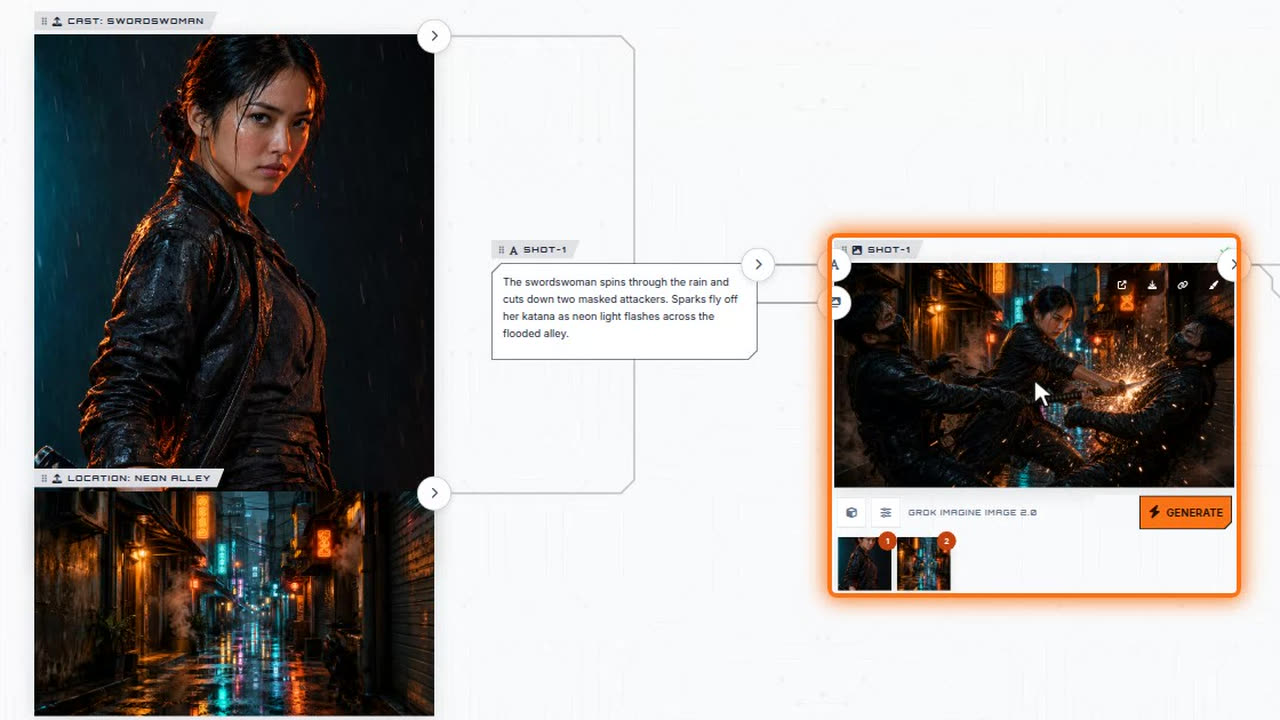
Describe a film. Get the script, the cast, the storyboard and every shot rendered in scene order.
- The script, the cast and the locations come out of one plain-language brief
- Cast and locations stay the same from shot to shot
- You pick the model per shot; the Forge does not pick it for you

Wire Your Own Generation Pipeline
Wire image, video, audio and upscaling steps into one board, then run that board for every batch after this one.
- 13 node types across image, video, audio and 3D
- Nothing spends until you press a card — the queue prices it first
- What you render lands in the video editor, with no download in between
Ask Anything. Make Anything.
Ask him for the document, the picture or the clip you need right now, and he makes that one thing.
- In every workspace, on the free plan and every plan above it
- Documents open in a panel you can read, download or print
- He can also change a picture you already have, or make it move

Told apart in one sentence each
They overlap less than the names suggest. This is the whole difference.
The Director writes the script, casts it, storyboards it and renders the shots in scene order. A film comes out.
Image into video into audio into upscaler. No script, no cast. Re-run the pipeline for the next batch.
He writes the document, or makes the one picture or clip you need, or changes a picture you already have. One thing at a time, not a film.
Forge directs for you. Spaces is a workbench you wire. Bloop is the one you ask.
Start with one idea
Describe a film or an ad. The Director builds the storyboard — brief, cast, scenes and shot prompts. No account, no card.